Happy International Yoga Day. Now Let's Talk About Who's Actually Profiting From Your "Self-Care"
International Yoga Day lands amid a $60+ billion wellness industry boom. A South Asian writer on cultural appropriation, gatekeeping, and what got lost in translation.
OPINION
Ananya Krishnan
6/21/20263 min read

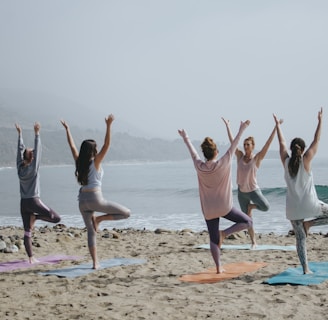
Today is International Yoga Day, a date the United Nations officially recognized back in 2014, and one that's grown every year into a global spectacle of influencers in matching activewear, sunrise photoshoots, and brand partnerships. My grandmother practiced yoga every morning of her adult life. She never once called it "self-care."
A $60 billion question
The global wellness economy, which includes yoga, but also meditation apps, supplements, "clean" beauty, and an ever-expanding category of products promising "balance" — is now valued well into the hundreds of billions of dollars, with yoga and mindfulness specifically representing a multi-billion-dollar slice in North America alone. The vast majority of that spending happens in the US, UK, Canada, and Australia — countries where yoga arrived relatively recently, repackaged, and at a price.
In India, yoga has historically been free — taught by family members, in public parks, in community spaces. The idea of a $40 drop-in class, or a $4,000 "yoga retreat" in Bali, would have struck most of the people who developed and sustained these practices over centuries as bizarre at best.
This isn't really about who's "allowed" to do yoga
I want to head off the most predictable response here: I'm not arguing that non-Indian people shouldn't practice yoga, or that anyone needs a permission slip rooted in ancestry to stretch. That framing usually leads to a fairly useless debate.
The more useful question is about who profits, and from what story. When yoga is marketed in North America, it's overwhelmingly stripped of its philosophical and spiritual context — the eight limbs of yoga, of which physical postures (asana) are just one part, get reduced to "yoga = stretching and breathing for stress relief," sold by largely white-owned studios and brands, often at price points that would be unrecognizable in the communities where these practices originated.
Meanwhile, actual South Asian yoga teachers in North America have spoken openly about being seen as "too traditional" or "too religious" for studios that prefer a more palatable, secular, Instagram-friendly version — even though that version is, in a real sense, their tradition, edited for a different market.
The gender layer here is significant too
Yoga in its modern North American form is overwhelmingly marketed to women — studio demographics, marketing imagery, and product lines (yoga-specific activewear is its own multi-billion-dollar category) skew heavily female. This isn't accidental: the wellness industry has found enormous success linking self-improvement practices to the broader cultural expectation that women should be perpetually working on themselves — their bodies, their stress levels, their "energy."
There's nothing wrong with finding genuine benefit in a practice that helps with stress, flexibility, or mental clarity — plenty of research supports real benefits from regular yoga and meditation practice. The issue is when "you need this to be okay" becomes the marketing premise, turning a practice that's meant to cultivate contentment into another item on the to-do list of things you're not doing enough of.
What would a more honest version look like?
A few things, really. Crediting the actual lineage and teachers a practice comes from, rather than presenting "mindfulness" as a generic, ownerless concept invented by wellness brands in the 2010s. Making these practices more financially accessible — community classes, sliding-scale studios, workplace programs that don't require a $150/month membership. And maybe, most simply: letting yoga (or meditation, or any imported wellness practice) just be a practice, rather than a purchase, a performance, or a personality.
A small story
My grandmother's yoga practice consisted of a mat on the floor of our living room, twenty minutes, no music, no phone, no "aesthetic." When I first started practicing yoga in Toronto during university, I remember feeling slightly embarrassed that my version — in a studio, with a subscription, surrounded by candles — felt so different from hers. It took me a while to realize the embarrassment was useful information. It was telling me something had been lost in the translation, and that the something wasn't trivial.
International Yoga Day is, on balance, probably a good thing — it's brought genuine benefits to a lot of people, and visibility to a practice with deep roots. But maybe this year, alongside the sunrise photos, it's worth asking: when an entire industry profits from "wellness," whose wellness is actually being prioritized — and whose origin story got left on the cutting room floor?
Sources referenced: UN International Day of Yoga official records; Global Wellness Institute economy reports; research on yoga's South Asian origins and Western commercialization (academic sources on yoga history and cultural appropriation).