Bezos, Fire, and the Climate Theater of Billionaire Space Travel
Every time a billionaire sends a rocket skyward, we are told to admire innovation, ambition, and the future. What we are rarely told is that the future seems to arrive in a private vehicle for a very small club of people.
OPINION
Aisha Ahmed
5/28/20264 min read
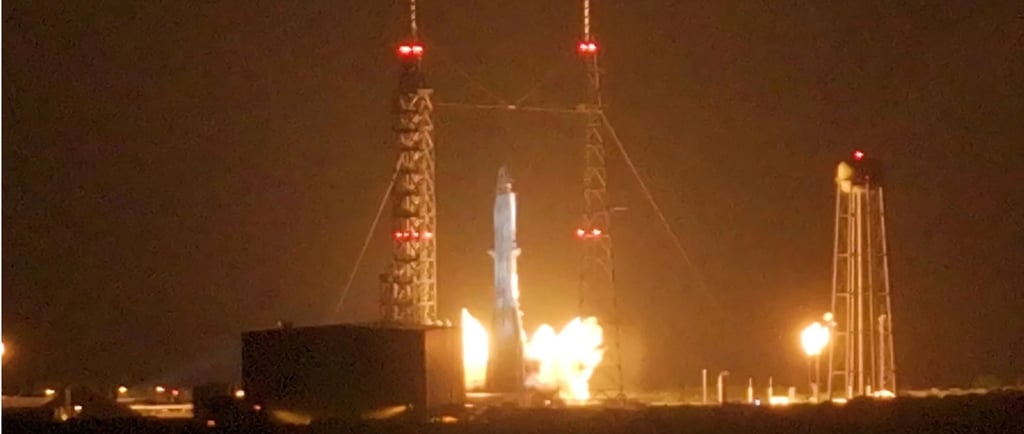
There is something almost poetic about watching a billionaire rocket fail in public. The machine rises, the cameras roll, the internet reacts, and within minutes the whole spectacle becomes a meme, a headline, and a political argument. But beneath the entertainment is a more serious question: what exactly are we applauding when the ultra wealthy launch themselves toward the sky and call it progress?
Billionaire space travel is sold to us as innovation. It is framed as courage, exploration, and a necessary step in the human story. That sounds noble enough until you look at who benefits, who pays, and who gets asked to feel guilty for a paper straw while private space programs burn enormous resources in the name of adventure. The contradiction is so large it almost feels designed to be ignored.
We live in a world where ordinary people are constantly told to do better. Use less plastic. Turn off the lights. Buy local. Separate your waste. Bring a reusable bottle. These are not bad habits, but they have become the moral language of a system that often refuses to look upward at the scale of its own excess. The average person is encouraged to treat sustainability like a personal personality trait, while the ultra rich treat the atmosphere like a launchpad.
That is what makes billionaire space travel so politically charged. It is not only about rockets. It is about hierarchy. It is about who gets to consume in ways that are celebrated as visionary and who gets blamed for leaving the tap running. It is about the fact that some forms of waste are aestheticized as ambition, while others are shamed as irresponsibility.
This is where the symbolism matters. A rocket launch is not just a technical event. It is a performance of power. It says that a small group of people can solve boredom, status anxiety, and ego with engineering. It says the sky is no longer a frontier for nations or public institutions alone, but a playground for private capital. It says wealth has become so concentrated that the richest people on earth can now build their own mythology in orbit.
The irony is hard to miss. The same culture that tells families to take shorter showers also celebrates billionaires who spend immense sums making sure they can briefly leave the planet. The same media cycle that agonizes over consumer waste often treats space tourism like a charming eccentricity. In this moral economy, restraint is for the public and spectacle is for the powerful.
There is also a deeper cultural story here. Billionaire space travel is the latest version of an old fantasy: the idea that the wealthy can escape the consequences of the world they helped shape. If the planet gets hotter, they buy cooler homes. If cities become crowded, they build private compounds. If public life becomes unstable, they buy influence, security, and mobility. Space tourism fits neatly into that logic because it turns escape itself into a luxury product.
That is why these launches provoke such strong reactions. People are not just angry about emissions or waste. They are angry about the message. They see a world where workers are asked to accept austerity while the richest individuals chase personal glory through giant machines. They see a system where the burden of moral behavior is pushed downward, while indulgence rises upward wrapped in the language of progress.
The climate dimension makes this even more uncomfortable. Environmentalism has often been packaged as a series of tiny corrections to ordinary life. Paper straws. Shorter trips. Less meat. Fewer plastic bags. Again, these are not meaningless, but they become absurd when set against the scale of elite consumption. A person choosing a reusable shopping bag is not the problem. A system that allows enormous carbon intensive vanity projects to be celebrated as genius is the problem.
Think of it like this. Imagine a neighborhood where one house is on fire, and everyone else is told to save water by skipping their showers, while one resident opens a fireworks store in the garage and calls it a contribution to community spirit. That is the emotional shape of the current climate conversation. The public is instructed to discipline itself, while the powerful are allowed to name their excess as aspiration.
We have seen this pattern before in other industries. Fast fashion tells consumers to shop “consciously” while flooding markets with cheap clothes. Tech companies ask users to be mindful of screen time while building products designed to trap attention. Food brands sell health while engineering addiction. In each case, responsibility gets turned into a consumer behavior issue, while structural power stays hidden behind branding. Space travel for billionaires is just the cleanest and most dramatic version of that trick.
The real problem is not that people are fascinated by rockets. Of course they are. Human beings have always looked up. Curiosity is not the issue. The issue is what happens when curiosity becomes luxury theater for the ultra rich, detached from public benefit and dressed up as collective destiny. If space exploration is meant to expand human knowledge, then it should be connected to public good, scientific progress, and shared advancement. When it becomes a private joyride for the wealthy, it stops looking like exploration and starts looking like a tax on everyone else’s patience.
There is a reason the internet responds to these launches with laughter as often as outrage. Humor is a way of saying the emperor has no clothes. A failed rocket can puncture the myth that wealth automatically produces wisdom. A dramatic launch can expose how much modern prestige depends on image management. The spectacle is supposed to inspire awe, but sometimes it only reveals how thin the story really is.
And yet the story persists because it serves power so well. It offers the rich a heroic narrative. It offers the media an easy headline. It offers the public a distraction from harder questions about inequality, taxation, regulation, and environmental accountability. It keeps us arguing about whether space tourism is cool instead of asking why so much private wealth is allowed to concentrate in the first place.
That is the uncomfortable truth beneath the spectacle. Billionaire space travel is not just about the sky. It is about who gets to define the future. Right now, the future is being marketed by the people most responsible for making the present so unequal. That should make everyone pause.
If we are serious about climate, fairness, and the public good, then we need to stop pretending every expensive innovation is automatically admirable. Some technologies deserve applause. Others deserve scrutiny. A rocket launch for science, shared exploration, or public mission is one thing. A billionaire choosing the atmosphere as a stage set for ego is another.
The next time a private rocket goes up in flames, literally or metaphorically, the real question is not whether the launch succeeded. It is whether we are finally ready to stop confusing spectacle with progress.